
Stefan Kobel
,
Kobel's Art Weekly 4 2026
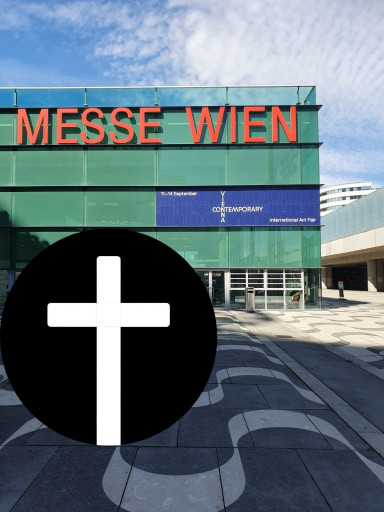
The art market in Austria has suffered two heavy blows. The leading art fair Viennacontemporary will no longer take place, as I report in Artmagazine. Michael Huber reports in detail for the Kurier (paywall): "In an interview with the KURIER, the managing director of the organising company, Markus Huber (no relation to the author), has now confirmed the end: “Viennacontemporary will not continue in its current form as an international art fair”. Under the current economic conditions, the format is no longer financially viable. Both the situation of public budgets and the closely related sponsorship potential do not allow for its implementation at present, explains Huber – at least not in the ambitious format that the fair organisers, shareholders, together with the gallery association and the City of Vienna had envisaged for 2023: The plan had been to bundle Vienna's forces in an “art autumn” and thus shine internationally." The financial background and the position of the gallery association can be read in Olga Kronsteiner's article in Der Standard: "The end of the VC does not come as a surprise to the local gallery scene. Both the financial difficulties of the operating company and “the problematic financial management and chaotic company structure” have been “the subject of discussion for some time”, explains Martin Janda on behalf of the gallery association. However, its central concern remains that Vienna should have “a strong platform for galleries”, which in turn “must also meet the high standards with which galleries have been working intensively for years and which have made Vienna an internationally renowned location for contemporary art”." A summary report without a paywall can be found at Monopol.
Just one day later, Salzburg loses its most renowned fair, reports Werner Remm in Artmagazine: "'The cancellation of the fair in Holy Week 2026 is the result of a long and intensive process. We have examined all the options available to us and invested a great deal of commitment,' Alexandra Graski-Hoffmann, managing director of ART&ANTIQUE Salzburg, announced today that the traditional art and antiques fairs in Salzburg cannot take place this year." In the Presse (paywall) from Vienna, Eva Komarek explains: "This fair, which has been held in parallel with the Easter Festival for more than 50 years, has failed to obtain permission to use the state rooms of the old residence. Due to the renovation of the cathedral quarter, the fair was supposed to move to the Congress Centre. However, after the renovation was postponed until further notice for budgetary reasons, fair organiser Alexandra Graski-Hoffmann reapplied for use of the Residenz. However, due to concerns about monument protection raised by an advisory board, the use was cancelled." The organiser points out that events will continue to be held in the Residenz. While the Viennese are failing in the market and failing themselves, in Salzburg the bureaucracy seems to be stifling a successful format without any need to do so.
In her preview report on the two fairs in Stuttgart and Ludwigsburg in the FAZ on 17 January, Ursula Scheer explains how the antiquarian guild is preparing itself for the present and the future: "In order to increase its appeal, however, the fair is now broadening its scope. It is opening up more to modern and contemporary art, with artist's books, photo volumes and record covers. A section for young collectors offers items at low prices ranging from 50 to 300 euros. The expanded supporting programme includes a cabinet exhibition marking the 150th birthday of Rainer Maria Rilke, display cases presented by exhibitors, panel discussions, lectures and workshops. The aim is to transform the antiquarian book fair from a marketplace into a sales and discussion space with a broader understanding of book, art and object culture."
Bettina Wohlfahrt summarises the past auction year in France in the FAZ (paywall): "Despite an unstable domestic political situation and a worrying international environment, the 2025 auction year ended on a positive note in France. In the second half of the year, almost all auctioneers saw an upturn and the quality of auction offerings improved. […] After an unremarkable first half of the year, Sotheby's was able to achieve impressive results in the second half, particularly through its prestigious auctions in October, and declared itself the French market leader at the end of December with a turnover of €386.5 million. For 2025, however, Patrick Drahi's company is including the auctions of luxury cars from the RM Sotheby's division in its balance sheet for the first time. The reported increase of 35 per cent melts away to a good ten per cent when the €70 million in automotive sales is excluded in order to maintain a correct basis for comparison with the previous year and its competitor Christie's, which in this case takes the actual top spot. [...] Some of the medium-sized houses can report excellent business figures. Millon increased its sales in France by 24.6 per cent to €88.7 million and moved up to fourth place."
It is not only in the USA that art is coming under increasing economic pressure, but also here in Germany, notes Ulrike Knöfel in Der Spiegel (paywall): "Artists who do not have the backing of high-turnover galleries are less interesting to many institutions. In this way, the market influences what appears in museums – or what does not. Independence looks different. [...] At the same time, however, there is a lack of awareness in this country of what a valuable treasure our own (magnificent) infrastructure of museums and art institutions represents and how important their financial resources are. In view of these circumstances, simply pointing the finger at America is, in the truest sense of the word, cheap." However, the fundamental difference between state repression and ideological control, which is exercised, among other things, with the cheque book, and sluggish cultural policy with the red pen is hardly elaborated in the argumentation.
Tax debts can be settled in the United Kingdom with art. This is even done transparently, as Leigh Anne Miller reports for Artnews: ‘Arts Council England has announced the results of the 2024-25 edition of its Cultural Gifts Scheme (CGS) and Acceptance in Lieu (AIL) initiatives. Thirty-two artworks entered public collections this cycle, with a combined value of almost $80 million.’
Melanie Gerlis highlights the extent to which large fortunes influence the art market in her report on single owner sales for the Financial Times (paywall): ‘What is new is the scale, in volume and value,’ says Caroline Sayan, president and CEO of the art advisers Cadell North America. Previously at Christie's for 25 years, she oversaw estate sales including the £835 million collection of Peggy and David Rockefeller in 2018, the year after the industrialist heir died. ‘Think of it as like planes landing. Before this time, there were smaller jets, individual planes, and it was easy to manoeuvre. Then, all of a sudden, these jumbo jets started coming in,’ she says. Statistics from the analysis firm ArtTactic show that in 2018, single-owner collections — predominantly estates — accounted for £1.7 billion (17 per cent) of auction totals, up from £600 million (7 per cent) in 2017. Since then, totals and percentages have surpassed this, with single-owner collections averaging £2.6bn in value and accounting for 23 per cent of auction sales in 2021-2025." It cannot be emphasised enough: almost a quarter of auction sales, and thus more than a tenth of the total art market volume, now comes from the holdings of one or two handfuls of people.
Deliberately ignoring the economic conditions, Jonathan Guggenberger laments the often submissive toothlessness of current cultural criticism in the taz: "Sure, reasonable fees, not only for the lucky old, but also for the unlucky young, would be a start. But money alone cannot shake off the despondency of this generation of authors, to which I also belong. No one can take this burden off our shoulders; the problem runs deeper. Too many of us say yes to everything, thank you, please, great, great, great, to anyone who can somehow polish our image in this ruinous business. [...] But who can blame them? These young authors have been shaped by a hunchbacked industry that is powerlessly managing its own demise; editors who, between advertising stress and cost-cutting frenzy, edit out all those texts that could cause them and us trouble – which is actually the point of critical writing and, as I said, would get a lot of clicks." His fiery speech concludes with the call: ‘If editors who were once young and rebellious themselves don't want to print your damn good texts again, then just ignore them. Then we'll just have to put our heads together, throw our voices and our wallets into the ring and start our own newspapers, magazines or platforms.’ However, a pile of empty wallets in the ring is, at best, a tripping hazard.
Lawyers Lena Pütz and Anna Bolz outline the obligations of the art trade with regard to data protection in WELTKUNST Insider (60 days free of charge): "A renowned auction house receives an enquiry from a customer. The customer wants to know how their personal data is being processed and requests comprehensive information about all stored data. The auction house must now immediately, but no later than within one month, provide a detailed explanation of what data it stores, why and for how long – a challenge for an industry that traditionally relies on discretion and serves highly demanding customers. Professionalism and trust are at stake here. This scenario illustrates the complexity that art dealers, galleries and auction houses face today. The tradition of discretion in the art market can potentially conflict with the transparency requirements of the GDPR. The authors work for a company that ‘offers anti-money laundering and data protection services specifically for the art market.’ This information is missing from the online version of the article.
Hans-Joachim Müller discusses the problems associated with trading in antiquities in the 17 January edition of the WeLT with Austria's leading industry representative: "First of all, it is important to know, says Christoph Bacher, that in most countries of origin, it was possible to make official and legal purchases for a very long time. In Egypt, for example, there were official antique dealers until 1983, and even the museum in Cairo had a shop where you could buy and export original objects in every price range. This has nothing to do with colonialism or looting. The Greek military dictatorship also promoted the trade in antiquities until the 1970s because it brought important foreign currency into the country. In Damascus, the trade flourished until 2007. But: “Those days are now over; no reputable dealer works without export papers or buys in a country where export is prohibited,” emphasises Bacher. 'You speak of suspected colonialism; I speak of a worrying art nationalism that is rampant today. Two thousand years ago, the Mediterranean region knew no national borders. For me, cultural assets are the heritage of humanity, not of governments." The author had to speak to a dealer from Austria because German bureaucratic thoroughness has practically destroyed the local market.
The founder and director of the Kochi Biennale, Bose Krishnamarachi, explains his sudden withdrawal on family grounds, reports Leigh Anne Miller in Artnews: ‘The Kochi-Muziris Biennale has weathered several controversies since the first edition, curated by Krishnamachari and co-founder Riyas Komu, opened in December 2012, from accusations of financial mismanagement and sexual harassment to communication breakdowns with participating artists and organisational challenges.’
The Berlin gallery Mehdi Chouakri is taking a break, I report in Artmagazine. The gallery owner explains his decision to Brian Boucher of Artnews: ‘My decision is for very personal reasons,’ said Chouakri in an email to ARTnews. ‘As you know, the traditional primary market model requires more and more time and energy, and I want to dedicate more of my time to the people close to me.’ The gallery may mount another exhibition as soon as this autumn, he said.
semi-automatically translated